Uncategorized

Why GLP-1 Medications Like Semaglutide Are Not a Solution for Lipedema

GLP-1 receptor agonists, such as semaglutide (marketed as Ozempic and Wegovy), have gained attention for their effectiveness in managing type 2 diabetes and aiding weight loss in individuals with obesity. However, their application in treating lipedema—a chronic fat disorder—raises concerns due to fundamental differences between lipedema and conditions these medications are approved to treat.


Understanding Lipedema: Not Just Excess Weight

Lipedema is a chronic condition characterized by the abnormal accumulation of fat, primarily in the lower body, leading to pain, swelling, and easy bruising. Unlike general obesity, lipedema fat is resistant to diet and exercise and often affects individuals who are not overweight. This distinction is crucial, as misdiagnosis can lead to inappropriate treatments.


FDA Approval of GLP-1 Medications: Specific Indications

Semaglutide has received FDA approval for specific uses:

  • Type 2 Diabetes Management: As an adjunct to diet and exercise to improve glycemic control in adults with type 2 diabetes.(source)
  • Chronic Weight Management: For adults with obesity (BMI ≥30) or overweight (BMI ≥27) with at least one weight-related condition, such as hypertension or dyslipidemia. (source)

These approvals are based on the medication’s ability to regulate blood sugar and promote weight loss through appetite suppression.


Limitations in Treating Lipedema

Applying GLP-1 medications to lipedema treatment is problematic for several reasons:

  • Lack of Efficacy on Lipedema Fat: Lipedema fat is pathologically different from general adipose tissue and does not respond to weight loss strategies that are effective for obesity.
  • Absence of Clinical Trials: There is a lack of robust clinical evidence supporting the use of GLP-1 agonists for lipedema.
  • Potential Side Effects: GLP-1 medications can cause gastrointestinal issues, pancreatitis, and other side effects, which may outweigh potential benefits for lipedema patients without comorbid conditions.

Importance of Accurate Diagnosis

Misdiagnosing lipedema as obesity can lead to inappropriate treatment plans. Healthcare providers need better training to distinguish between these conditions to avoid prescribing ineffective and potentially harmful medications.


Emphasizing Anti-Inflammatory Diets

For lipedema management, adopting a health-promoting, anti-inflammatory diet may offer benefits without the risks associated with GLP-1 medications. Diets rich in whole foods, healthy fats, and low in processed sugars can help reduce inflammation and manage symptoms.


Conclusion

While GLP-1 receptor agonists like semaglutide are valuable tools for managing type 2 diabetes and obesity, they are not appropriate treatments for lipedema in the absence of these conditions. A focus on accurate diagnosis and holistic, non-pharmacological approaches remains essential for effective lipedema management.

Photo by Pavel Danilyuk on Pexels.com
Uncategorized

Self-Diagnosis and Symptoms of Lipedema: How to Tell If You Might Have It

If you’ve ever wondered why your legs seem disproportionately large compared to the rest of your body—or why dieting and exercise don’t seem to shrink stubborn fat in your lower half—you might be looking at something more than just weight gain or cellulite. Lipedema is a chronic fat disorder that affects millions of women, but it often goes undiagnosed or is mistaken for obesity. While only a trained specialist can make an official diagnosis, this article will walk you through key symptoms and self-checks to help you with self-diagnosis and better advocate for yourself.


What Is Lipedema?

Lipedema (pronounced LIP-uh-dee-muh) is a disorder of fat distribution that primarily affects women. It causes the abnormal accumulation of painful fat, usually in the legs, hips, buttocks, and sometimes arms—sparing the hands and feet. This condition is progressive and resistant to traditional weight loss methods.


The Most Common Signs and Symptoms

Here’s what to look for when doing a self-diagnosis check:

  • Disproportionate lower body fat: Fat often builds up symmetrically on both legs or arms, even if your upper body remains lean.
  • Column-like or “tree trunk” legs: The legs may appear thick and uniform in size from thighs to ankles, often ending abruptly at the ankles or wrists.
  • Cuffing at the ankles or wrists: There’s usually a sharp demarcation where fat ends and normal tissue begins.
  • Tenderness or easy bruising: The affected areas are often painful to the touch and bruise more easily than normal.
  • Swelling that worsens throughout the day: While fat is the primary issue, swelling (especially from standing or heat) is common and may reduce overnight.
  • Negative Stemmer’s Sign: You can pinch the skin at the base of the toes or fingers—if you can lift the skin, that’s a negative result and points toward lipedema rather than lymphedema.

The “Float Test” – Lipedema Fat Is Buoyant

One interesting self-test is to check for buoyancy. Women with lipedema often find that their legs float more easily in water. This is because lipedema fat has a higher fluid and connective tissue content. Try relaxing in a bathtub or pool and notice if your legs tend to float more than expected.


Palpation Test: Check the Cubital Area

Another helpful self-check is palpation of the cubital area, which is the inside crease of your elbow. Gently press this area with your fingers. Women with lipedema may feel small nodules, lumps, or even discomfort. Similar nodules might be found in the thighs or upper arms.


Understanding the Stages of Lipedema

Lipedema progresses through four distinct stages:

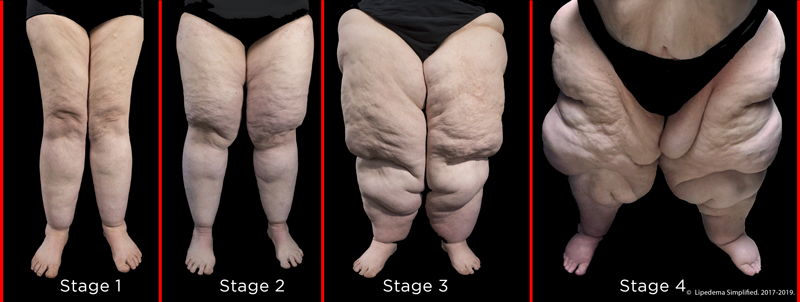
  • Stage 1: Smooth skin surface with soft, evenly distributed fat. Swelling comes and goes.
  • Stage 2: Uneven skin with indentations or “mattress-like” texture. Fat becomes harder and more nodular.
  • Stage 3: Large fat lobes form, particularly around the knees or thighs. Mobility may start to decline.
  • Stage 4 (Lipo-lymphedema): Advanced fat accumulation with concurrent lymphedema. This stage includes significant swelling, hardening of tissue, and more functional limitations.

When Does Lipedema Get Worse?

Lipedema tends to worsen during times of hormonal change, including:

  • Puberty
  • Pregnancy
  • Perimenopause and menopause
  • Starting or stopping hormonal birth control

If you noticed sudden changes in your body shape during these times, particularly in your lower half, it might be worth looking into.


How to Tell Lipedema Apart from Cellulite or Obesity

While cellulite and general weight gain affect many women, lipedema is distinct in these ways:

FeatureLipedemaCelluliteObesity
Symmetrical fat accumulationSometimes
Pain or tendernessSometimes
Swelling throughout daySometimes
Hands/feet unaffected
Bruising easily
Responds to diet/exercise

What to Do If You Suspect Lipedema

If you’ve done a self-diagnosis and recognize these symptoms, the next step is to seek out a specialist, preferably one familiar with lymphatic disorders or who has experience diagnosing and treating lipedema. Many general practitioners are unfamiliar with this condition and may misdiagnose it as simple obesity.

You might want to bring documentation, pictures of your body changes over time, and a symptom diary to your appointment to help make your case.


Final Thoughts

Learning about lipedema can be both enlightening and emotional—especially if you’ve struggled with body image, dieting, or unexplained pain for years. While a formal diagnosis is essential, becoming educated and self-aware can be the first empowering step toward healing and advocacy.

If you suspect you might have lipedema, you’re not alone. Keep learning, seek out community, and most importantly, don’t give up on finding answers.

Source: https://torontophysiotherapy.ca/patient-guide-to-self-diagnosing-lipedema-and-lipo-lymphedema/

Uncategorized

Why I’m Using Red Light Therapy During My 50+ Pound Weight Loss Journey

As I work through my LipedemaVegan 180-Day Protocol, one of my top priorities is to protect my skin, reduce inflammation, and support fat loss as I shed over 50 pounds.

That’s why I’m using red light therapy (RLT) — also known as low-level laser therapy (LLLT) — as a daily tool in my routine. Not just for beauty, but for deep cellular support as my body transforms.

Here’s why I added red light therapy to my protocol, the science behind how it supports weight loss and skin integrity, and how I’m gradually increasing the intensity each month to match my progress.


🔬 What Is Red Light Therapy?

Red light therapy uses wavelengths of red and near-infrared light (typically 630–850 nm) to stimulate the mitochondria — the energy-producing engines inside our cells. When absorbed by the skin and tissues, these wavelengths can:

  • Increase ATP production (cellular energy)
  • Improve blood flow and oxygen delivery
  • Reduce inflammation and oxidative stress
  • Stimulate collagen and elastin synthesis

This makes red light therapy an excellent choice for fat loss, skin tightening, lymphatic drainage, and pain relief — all of which are relevant for anyone with lipedema or chronic inflammation.


⚖️ How Red Light Therapy Supports Weight Loss

Here are the most compelling reasons I’m using RLT while losing weight:

1. Improved Fat Metabolism

Research shows that red light therapy may enhance lipolysis — the breakdown of fat stored in adipose cells. One randomized trial published in Lasers in Surgery and Medicine found that subjects receiving RLT lost more inches and body fat compared to the control group [1].

📚 Reference: Jackson RF et al. “Photonic lipolysis: a clinical trial.” Lasers in Surgery and Medicine, 2012.

2. Skin Tightening & Collagen Preservation

As we lose fat — especially over 50+ pounds — skin laxity becomes a concern. Red light therapy stimulates fibroblasts to produce collagen and elastin, which may help maintain firmness and reduce sagging over time [2].

📚 Reference: Avci P et al. “Low-level laser (light) therapy (LLLT) in skin: stimulating, healing, restoring.” Seminars in Cutaneous Medicine and Surgery, 2013.

3. Lymphatic Drainage and Inflammation Reduction

Lipedema involves lymphatic stagnation and chronic inflammation. RLT may improve lymphatic flow, reduce pain, and encourage tissue repair — particularly in combination with dietary anti-inflammatories and fasting.

4. Mitochondrial Health = Metabolic Health

Red light therapy enhances mitochondrial function, which is critical for metabolism, energy, and hormone balance. Healthier mitochondria = more efficient fat burning and less fatigue during weight loss.


🌞 My Red Light Protocol (Month by Month)

I started slowly and am building up intensity and exposure as my fat loss progresses, so that my skin and lymphatic system stay supported.

  • I use a full body red light mat with both 660 nm (red) and 850 nm (near-infrared) wavelengths.
  • I started at Power Level 1 (50W), and month-by-month I am moving up a power level (which increase by 20W intervals) while continuing to use 10 minutes of exposure to all body areas.
  • I apply red light before bed to support circulation, relaxation, and lymph movement.

✨ Why It’s Worth It

Losing 50+ pounds is about more than the scale. It’s about preserving skin elasticity, reducing lipedema pain, and promoting long-term cellular health.

Red light therapy gives me an edge — one that feels good, supports healing, and helps my body adapt gracefully to the changes I’m creating with nutrition, fasting, and movement.


Want to Try Red Light Therapy?

If you’re on a weight loss journey with lipedema, I highly recommend trying a full body red light mat, like this one I use. There are many options that can make a real difference — even in just 10 minutes a day.


📚 References:

  1. Jackson RF, et al. “Photonic lipolysis: A clinical trial.” Lasers in Surgery and Medicine, 2012.
  2. Avci P, et al. “Low-level laser (light) therapy (LLLT) in skin.” Seminars in Cutaneous Medicine and Surgery, 2013.
Fat Loss Strategies · Mindset and Motivation · Practical self-care strategies · Uncategorized

Is it possible to be overweight AND undereating?

We’ve heard it since 6th grade PE class. If you eat more calories than you need, you’ll gain fat. And in order to lose weight, you just need to eat fewer calories… or at least that’s what the experts in our lives told us. Doctors, PE teachers, coaches, family members, magazines, etc. all told us that we needed to eat less to lose weight. And if you wanted to lose weight and reach your ideal body weight, you listened, didn’t you? You listened to them:

  • you starved yourself
  • you got comfortable with the feeling of being hungry
  • you always ate less than you wanted (except for those binges that resulted from hours and days of deprivation)
  • you beat yourself up when you gave in to cravings
  • you always tried again every Monday

Fast forward past all puberty, childbirth, sedentary jobs, traumatic and painful times in our lives, and all of the stressful events in our life that contributed to weight gain. You may be left with unwanted fat, and completely baffled by how you could be constantly dieting for years and decades, yet still be overweight!

Kim Kardashian eats 1700 calories per day, and is 5’3 and 110 pounds. Have you tried losing weight eating by eating between 1600-1800 and still failed to lose a single pound? How can a woman or man who weighs 100 pounds more than Kim Kardashian NOT lose weight consuming the same amount of caloric energy that she does?

How can a woman or man who weighs 100 pounds more than Kim Kardashian NOT lose weight consuming the same amount of caloric energy that she does?

The answer, quite simply, is metabolism. What if I told you that the harder you have tried to lose weight, the more difficult it will be? The second you decide to drastically cut calories in order to maximize your caloric deficit, you are creating a plateau and will be stuck at that undesirable weight until you begin to nourish your body. The key to weight loss is slow and steady weight loss, otherwise your body will work against your best efforts. And you may be burning more than you thought you were! (Check out the weight loss calculator at the end of this article)

Reverse dieting is all the rage in weight loss and body building communities these days, but what does it mean? Reverse dieting is the act of beginning to add MORE calories to your diet at a slow rate, in order to end a diet or increase your metabolism. Everyone has heard about folks who lost large amounts on weight, only to return to the unhealthy eating habits of their past and regain the weight they lost (and then some!). Your body is designed for survival. If you overfeed, it will store the extra calories as body fat for a future famine when you may need that fat for energy! The problem is, that in America, that day of famine never comes, and our bodies are biologically designed to hold on to that body fat.

But what if I told you that gradually increasing the calories you eat might actually result in weight loss? I personally never lost a pound after months of eating 1700 calories, but when I increased my intake to 2000 calories of whole food plant based meals, I finally saw the scale move in the right direction! Of course everyone’s target calories are unique to their age, height, weight, and activity level! What types of foods are considered WFPB? Whole grains, root vegetables, legumes, vegetables, fruits, seeds, and nuts, of course!

You know what else happened when I increased my caloric intake? I felt happier and healthier. I was more energetic to squeeze in that dog walk. I had less brain fog and more focus. I became goal-oriented. I met my pedometer and step goals with ease! It is possible that the rut you are in is caused by under nourishing yourself, and if you simply increased your intake of healthy foods, you would feel re-energized AND would accomplish your health related goals! Reach out any time to discuss your weight goals with me. I’m here for you!

Also, I highly recommend the following calculator for weight loss. Track your calories for a few day and see if you are eating more or less than this target! https://www.bodybuilding.com/fun/macronutcal.htm

Photo by Amina Filkins on Pexels.com
Mindset and Motivation

A Guide to the New Healthier You!

If you are overweight, you have an overweight mindset. As much as we want to feel like victims to a cruel world that made us fat, ultimately it was our decisions that made our bodies overly fat. Recovery starts by realizing that we have a problem with our current behaviors and taking responsibility for the changes we want to see.

If you are eating junky processed foods, it’s no surprise that you “can’t lose weight”. If your day is largely sedentary, it’s no surprise that you “can’t lose weight”. If you eat clean all week and then go buckwild on the weekends, it’s no surprise that you “can’t lose weight”. In contrast, how would your weight look if you walked at least 5 days a week for 45 minutes, if you did strength training at least 2 days a week for 30 minutes, if you broke up long periods of sitting with a quick Zumba workout, if your everyday breakfasts and lunches were predictably healthy yet satisfying, if dinnertime prep consisted of chopping loads of fresh veggies and whole plant foods?

Perhaps you overeat when you are stressed out. Perhaps you can’t say no when your favorite snack foods are on sale. Perhaps you drink alcohol when you are bored or frustrated. Perhaps your alcohol consumption leads to decreased inhibitions when it comes to food choices. How do we get to be the people we want to be? How can we reprogram ourselves so that our baseline behaviors are healthy ones, perhaps with the exception of special occasions?

Highly successful people know that change comes from within ourselves. The change you seek is seeking you. The person you want to be is always one decision away. Each day, we must choose to be the healthier version of ourselves with our thoughts and behaviors. Would the healthier version of you finish off the tray of Oreos? Would the healthier version of you snack on processed foods while watching Real Housewives reruns? Or do those behaviors belong the the old you- the one that is long gone at this moment, because you decide it is so.

One of the first vegan resources I ever came across was a book series called “Skinny Bitch”. Her attitude, while controversial, was that if you wanted to lose weight, you had to stop acting like a fat person. You had to stop eating what fat people eat. And you needed to start behaving more like a skinny person. This approach received some pushback because there is thin line between this type of reasoning and the flawed reasoning associated with addictive eating disorders. However, I think that overweight folks do need to understand that they are never going to be like that one friend who can eat burgers and fries at the drive through and never gain a pound. If your life experiences have taught you that your genes are programed to accumulate adipose, then behaviors must be changed. And that all starts in the mind.

There is incredible research into manifestation and multiple universe theories that assert that we truly design our future with each thought, behavior, and action. However, this all begins with our thoughts- what we think is possible, what we think we are capable of… You are capable of living a healthier life. You are capable of sticking with it. You are capable of turning your life around and being an inspiration to others. But it begins with your decision to be the new you! More to come on mindset and motivation, but please reach out at weightogovegan@outlook.com or comment below if you are ready for the new you!

Photo by Andres Ayrton on Pexels.com
Fat Loss Strategies · Uncategorized

Hope for Those With Lipedema

I strive to write weight loss articles for all people regardless of age, gender, etc. However, today’s post is specifically written for those who suffer with rare adipose tissue disorders, such as lipedema (NOT to be confused with lymphedema). Whether you have never heard of this condition or suspect you have it, keep reading!

Lipedema is a genetic condition believed to effect at least 15% of women. It is characterized by disproportionate distribution of body fat to the butt and thighs (and sometimes calves). Many people call it “painful fat syndrome” because the fatty accumulations are very sensitive to touch and pressure. It’s typical onset is puberty, and the fat itself is resistant to diet and exercise. Interestingly, lipedema is unlike normal fat deposits. The fatty tissue floats when the body is submerged in water, unlike normal fatty tissue. Additionally, it has less circulatory activity, making it susceptible to “holding on to the cold” even when the body is taken into a warm place following a walk in wintery weather. Observers and sufferers alike often refer to the appearance of the legs as “tree trunks”. Individuals in lipedema are often also diagnosed with Ehlers-Danlos hypermobility syndrome .

When I learned that the extra fat on my hips, butt, and thighs (and the frames of the vast majority of my female family members) was attributed to this untreatable condition, I was both relieved and devastated… relieved that my struggles with weight loss were not just due to my lack of willpower, but devastated in what felt like lifelong sentence to live in a fat suit. The only approved treatment is liposuction, which is expensive and not covered by insurance. Often, it takes multiple liposuction treatments, as the condition progressively worsens over time and can lead to more serious medical challenges.

There is a great debate over the best diet for this condition, but I can attest that a vegan diet is by far the best option to slow the progression of lipedema. From the time the fat accumulation began on my pear shaped body, I experienced pain when walking or running. I would describe the pain as being located in the fat tissue and caused by the vibration of each step I took. However, as I’ve switched to a vegan diet high in anti-inflammatory vegetables, fruit, whole grains, nuts, seeds, etc.; this pain in the tissue is nearly gone. I strongly believe that my dietary choices (high fiber, high water content, high nutrient density, loads of antioxidants, and strict avoidance of inflammatory foods such as dairy, etc.) have prevented me from progressing to the next stages of lipedema. Stage 2 is characterized as the fat from the thigh beginning to hang over the knee, and this has never happened to me in my 20 years since puberty (nearly all of them vegetarian, and the past 12 vegan!). Others my age have already typically seen their lipedema move to stage 2 by this point.

Over the past 12 years as a vegan, I gained about 20 pounds of weight in my arms and belly areas due to excessive enjoyment of vegan junk foods, stressful work conditions, and pregnancy. I am slowly but surely losing this weight now with a clean, whole food plants based diet. This diet has slowed the progression of my lipedema, and is advocated by experts on the topic such as Chuck Ehrlich (see below). I accept that the stubborn lipedema fat that makes me extremely pear shaped may not come off my body without surgical intervention, but I am motivated to lose the non-lipedema fat in order to reduce the risks of disease associated with being overweight/obese, including diabetes, heart disease, and cancers.

2025 Update!

In February of 2025, I designed a 180 Day Lipedema Fat Reduction protocol, which has become the focus of this blog and my social media presence! Follow me on YouTube, Instagram, Facebook, and Pinterest for updates on my weight loss while following this unique diet plan, supplement regime, and intense therapy.

Click “LipedemaVegan eBooks” on the top of this page for my helpful resources to get you started on a lipedema-slowing vegan diet today! Information on my protocol will be released via social media channels first, then via a comprehesive downloadable resource!

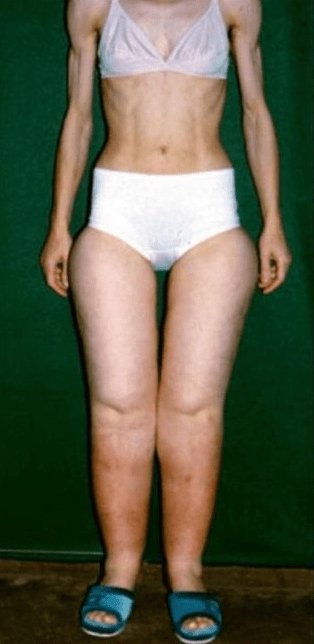
This woman suffers from anorexia, but the lipedema fat tissue is unaffected by the starvation.
The stages of lipedema, from http://www.lipedema-simplified.org .
Fat Loss Strategies · Uncategorized

To Count Calories or Not to Count Calories…

Ahhhh few things stir up debate within the “weight loss” community as the topic of counting calories. Several years ago, a YouTuber named Freelee the Banana Girl and her partner DurianRider famously proclaimed that you could achieve extremely low body fat by eating 3000+ calories, as long as they are of plant origin. This led many vegans, myself included, to go to town on all their favorite whole plant foods, and low and behold, we gained weight because we were not exercising as much as this pair. It is true that consistently eating more calories than you burn leads to weight gain, although that is not the only factor that makes people overfat.

However, it is also detrimental to create extreme caloric deficit. Certainly, eating fewer calories than you burn will result in weight loss. But long term extreme caloric restriction has a multitude of side effects including mood disorders, endocrine dysfunction, disordered eating patterns, and so forth. There is also great debate over the term “metabolic damage“. I personally have experienced long term difficulty losing weight after prolonged periods of extreme caloric deficit, so although there is little research to support this concept, I know first hand that it is true.

There is an anti-diet culture on social media today, and it is easy to understand why. For decades, corporations have made billions of dollars selling “diet” products while purposely confusing the consumer. In actuality, these corporations don’t want you to succeed at weight loss. They want you to become hooked on their product to maintain weight loss. This anti-diet culture often pushes a “fat tolerance” message as well, asserting that it is OK to be fat. I know from personal experience that overweight people are often discriminated against. But obese people are at an increased risk of diabetes, heart disease, and cancer- the top killers of Americans.

So what is the answer for those who are striving to achieve their ideal body weight? What is the answer for those who are not comfortable being overweight and obese?

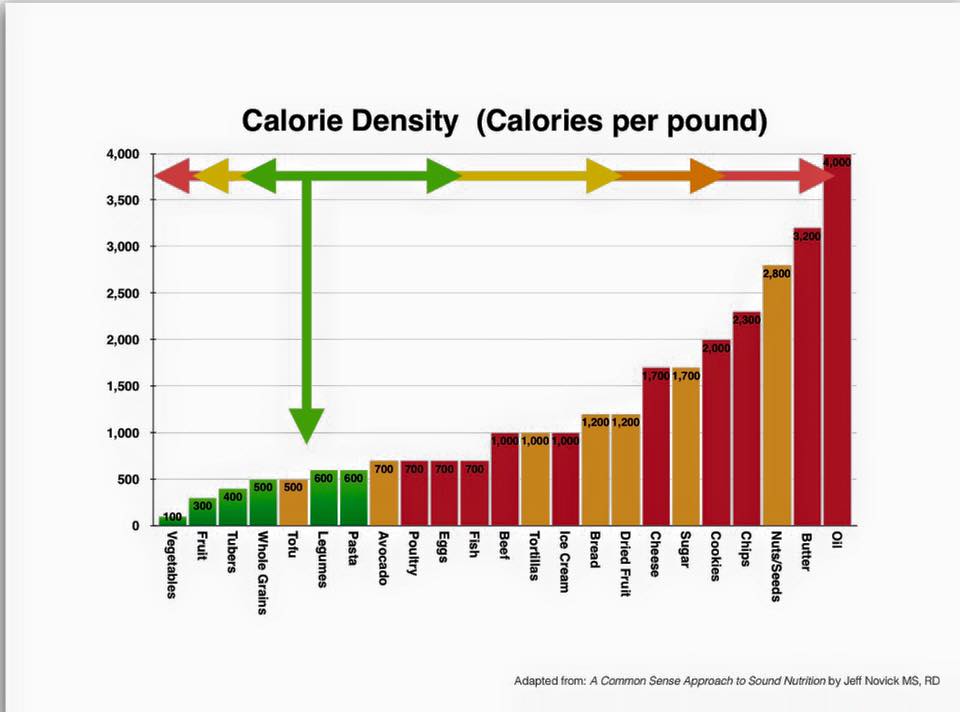
Well, you do need to eat less than you burn, but not too much less. This can be achieved by eating more of the low caloric density foods (indicated in green below) and less of the yellow and red food categories! The foods in the green category below are also filled with water and fiber to increase satiation and fullness, a necessary component of a healthy lifestyle. And we all know what it feels like to be on a diet where you never feel full. A caloric deficit of about 500 calories per day will be the goal, but please know that only calorie calculators (and the ones on exercise machines and pedometers) are wildly inaccurate.

Counting calories daily is not necessary when eating calorie dilute foods! However, once you get into the groove of this whole food plant based lifestyle, I would advise that you enter your calories into a calorie counter to make sure you are not overeating (or undereating), especially if you are coming from a binge eating or disordered eating past. I checked my calories yesterday while following the #eatyourvegchallenge, and found that I was eating 1700 calories which is a great amount for weight loss for my height, weight, and activity level! More about binge eating in my next post!